Rishikesh is famous for its two suspension bridges, and most first-time visitors are surprised to learn that Laxman Jhula and Ram Jhula are two entirely different experiences. Laxman Jhula is the long, commercial, permanently busy footbridge. Ram Jhula is the quieter, newer, wooden bridge that becomes the centre of evening prayer. Knowing the difference is the difference between a pleasant walk and a memorable one.
Both bridges sit within a comfortable walking distance of Sakshi Upvan Resort, so you can start your morning on the balcony, watch the sunrise over the Ganga, and be standing on either bridge well before the crowds build up.
Laxman Jhula — the busy one
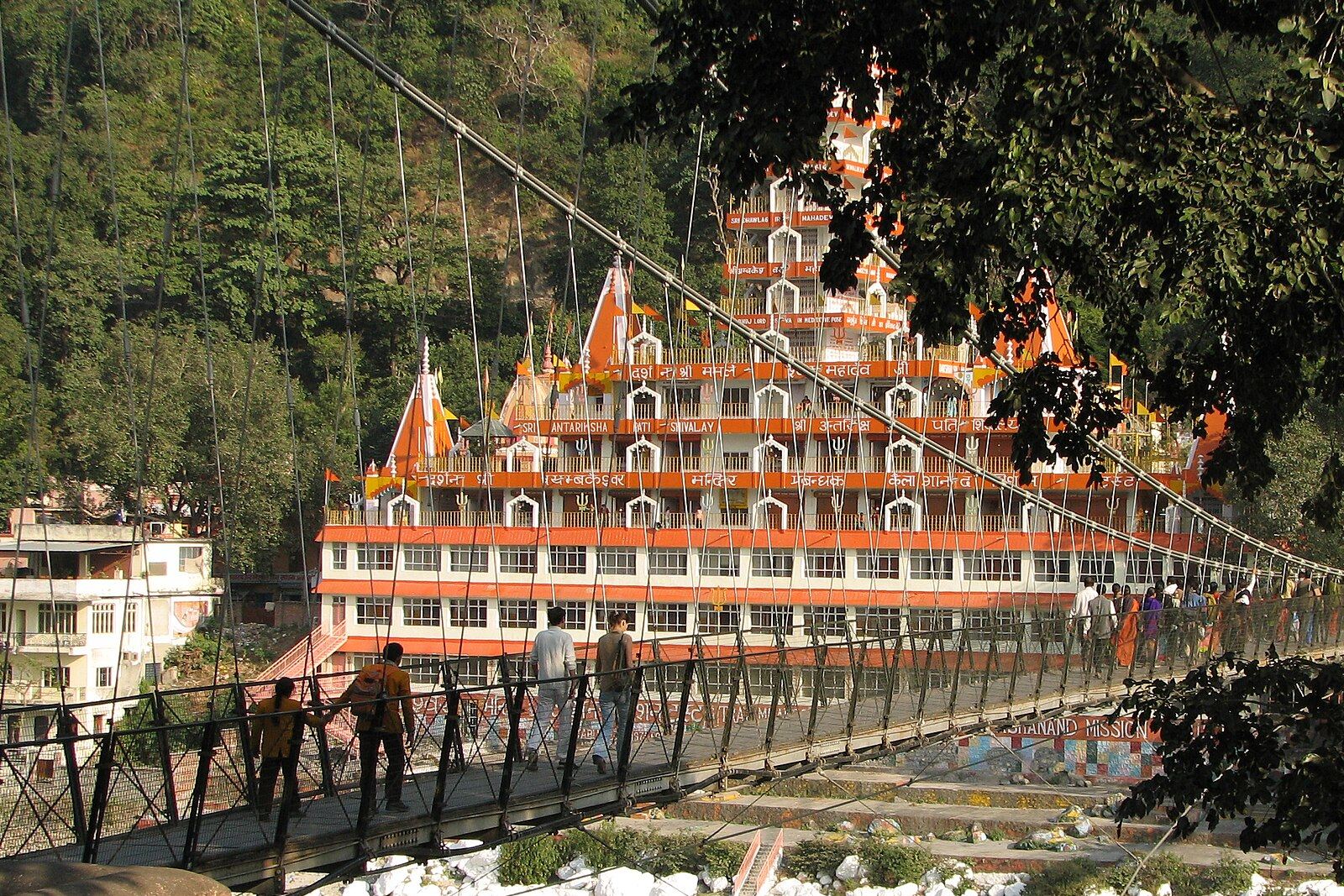
Laxman Jhula is the older and more famous of the two. It is a 137-metre steel suspension bridge, first built in 1929 and opened to vehicles in 1972. It connects the main Rishikesh bazaar side to the Tapovan and Parmarth Niketan side of the river.
In the mornings it is a working bridge — buses, scooters, cycle rickshaws, sadhus, school children and pilgrims all share it. By late afternoon the vehicle traffic stops, and the bridge becomes a pedestrian corridor between the bazaar and the ashram side of the Ganga.
Timings and entry
- Open: roughly 6:00 AM to 9:00 PM, every day
- Entry charge: a small bridge toll of about ₹10–₹20 per person applies to pedestrians during busy hours
- Best time: 7:00 – 9:00 AM for clean photographs with almost no people
- Worst time: 4:00 – 7:00 PM, when the bazaar traffic, tour buses and the market crowd all converge
What to do on Laxman Jhula
- Walk to the eastern end for the classic view of the Rishikesh skyline, the Clock Tower and the Himalaya behind it
- Continue across to Parmarth Niketan for the evening Ganga Aarti, which takes place on the ghat directly opposite the bridge
- Browse the market on the western side — brass lamps,Rudraksha malas, yoga mats and marigold garlands
The classic postcard shot of Laxman Jhula is taken from the eastern side, standing on the approach ramp with the bazaar and the Clock Tower behind you.
Ram Jhula — the peaceful one
Ram Jhula is the newer of the two bridges, built in the 1980s in traditional divari style with a wooden deck and a 226-metre span. It links the Tapovan side to the Swarg Ashram side, and it is the bridge most people mean when they talk about the evening aarti.
The wooden deck creaks underfoot, the lamps of the aarti are set up directly on the ghat beside it, and the crowd is noticeably thinner than at Laxman Jhula. If you only have time for one bridge, make it Ram Jhula — especially in the evening.
Timings and entry
- Open: around 5:30 AM to 9:00 PM
- Entry charge: free in the evening; a nominal toll applies during the day
- Best time: 5:30 – 7:00 PM, when the oil lamps are lit along the ghat
The evening Ganga Aarti at Ram Jhula
At sunset, priests on the ghat next to Ram Jhula perform the Ganga Aarti with multi-tiered brass lamps. The ritual lasts roughly 45 minutes to one hour and is completely free to watch. Thousands of people gather, so arrive 30 minutes early if you want a spot on the steps rather than standing behind a crowd.
The Aarti is a puja, not a show. Sit on the steps, keep the water level of the Ganga below you, and simply watch the lamps circle seven times before the offering is given.
Which bridge should you pick?
| Detail | Laxman Jhula | Ram Jhula |
|---|---|---|
| Length | 137 metres | 226 metres |
| Built | 1929, opened to vehicles 1972 | Built in the 1980s |
| Material | Steel | Wooden deck, divari style |
| Morning | Busy with local traffic | Calm and open |
| Evening | Busy, leads to Parmarth Niketan | Quiet, the aarti ghat |
| Best for | Market, sightseeing, Parmarth Niketan | Photography, Aarti, quiet time |
Tips from our front desk
- Carry some cash in small notes for the bridge toll and for offerings at the ghat
- Wear footwear you can slip off easily — both bridges have wooden decking and the banks are stepped
- Between May and June the river is high and the walkways near Ram Jhula can get slippery after rain
- Do not step into the Ganga from the ghats — currents are far stronger than they look
- Sunset in Rishikesh shifts quickly. If you want the aarti, leave the resort by 5:00 PM in winter
Staying close to both bridges
Our rooms and suites are located on the riverside, roughly a ten-minute walk from Ram Jhula and a short taxi ride from the Laxman Jhula bazaar. Guests who book direct also get a tour desk that can arrange a guided temple trail, an evening aarti walk and rafting on the Ganga.